

Adjustment of the optimal timbre of the vocals
Whether it's a human voice, a song, or the sound of an instrument, it's not a single tone, b...
Read moreCLUB EQ usually requires the help of a pink noise generator and a real-time spectrometer to adjust precisely. CLUB EQ is mainly used to correct and compensate for CLUB frequency characteristics. Therefore, the consistency between the environment of the hall and the actual listening environment should be ensured during debugging. In addition, the adjustment of the CLUB EQ sometimes needs to be combined with the adjustment of the speaker layout.
CLUB EQ compensates for ambient frequency characteristics by changing the frequency characteristics of the signal. Changes in frequency characteristics inevitably lead to changes in phase characteristics, causing phase distortion. When the amount of adjustment of CLUB equalization is too large, especially in a certain wide frequency band, and a large amount of adjustment is necessary to achieve the equalization effect, although the frequency characteristics of CLUB are corrected, due to phase distortion, the listening experience will become very poor, which will be more prominent for stereo systems. In poor sound conditions, the adjustment of the CLUB EQ can sometimes only be a compromise between frequency characteristics and listening feeling. The flat result of forcing frequency characteristics is sometimes self-defeating. The best way to do this is to improve the acoustic characteristics of the CLUB itself.
1. Debugging process
(1) Use pink noise as the system input test signal, which is obtained by white noise after passing through a -6dB/oct filter. Compared with white noise, pink noise has more low-frequency energy. Because the energy distribution of pink noise is close to that of real music signals, it is often used as a test signal for sound engineering and audio equipment. The power capacity of the speaker is generally pink noise, and the frequency response of the laser record player above the mid-range can be achieved at 20Hz-20kHz+0.5dB, which can meet the test requirements.
(2) Input the pink noise into the mixer, adjust the mixer to the standard output level, usually OVU, the output level is +4dB, it should be noted that the EQ of the equalizer on the mixer is set to a flat line, that is, all are placed in the zero position, and the frequency of each section of the test signal is neither increased nor attenuated. The frequency adjustment potentiometer of each point of the CLUB equalizer is also temporarily placed at the zero position. Slowly increase the amplifier volume adjuster to hear the pink signal sound, monitor with the sound pressure meter until the sound pressure level of the pink noise signal in the hall reaches about 85dB.
(3) Place the measuring microphone in the center of the hall, and place the selection switch on the spectrometer in the "OCT" file (this gear is the octave filter file, corresponding to the characteristics of pink noise). At this time, the LED display on the real-time spectrometer is the frequency characteristic curve of the listening environment. The flatter it is, the better the frequency characteristics of CLUB Jiansheng.
(4) Adjust the frequency booster/attenuator at each point on the equalizer so that the frequency characteristic curve on the spectrometer is in a straight line.
After the above debugging, it is generally necessary to "smooth" the equalization curve on the equalizer, mainly to prevent excessive phase distortion when the equalizer is tuned to the jagged frequency characteristics.
2. Key points of CLUB equalizer adjustment
(1) In the low frequency band of about 20-50Hz and the high frequency band above 14kHz, there is no need to force the frequency characteristics, especially for the low frequency band. Because it is difficult for ordinary speakers to extend to 20Hz, it is good to be able to reach 40Hz. Forcing the flatness of the low-frequency characteristics to increase the subwoofer will cause the speaker to "get out of control" due to excessive extended low frequencies, and the distortion will be aggravated.
(2) The adjustment of the CLUB EQ should always take into account the contradiction between flat frequency characteristics and minimizing phase distortion, and make a compromise.
(3) If there are obvious "peaks" and "valleys" in the frequency characteristics of the sound environment, consider changing the position of the speaker and trying to change the sound characteristics.
(4) The adjustment of the CLUB equalizer is a very meticulous work, and it needs to be repeated many times before it can be finally adjusted. This is because during the adjustment process, it is often necessary to make some adjustments to the speaker positioning and sound environment, and the equalizer will be mutually restrained when adjusting.
Objectively speaking, the role of the CLUB EQ is limited, and the defects of the sound environment cannot be expected to be solved entirely by the CLUB EQ, and the smaller the equalization, the better the sound quality. In the absence of a pink noise generator and a real-time spectrometer, the audio signal generator can be used to feed the frequency signal of the same amplitude to the system according to the selected frequency points on the CLUB equalizer, and the sound pressure in the field can be tested with a sound pressure meter, and the input signal of each frequency point can produce the same sound pressure level in the field through the adjustment of the CLUB equalizer. This method of debugging is less effective than using standard pink noise. Therefore, professional units should be equipped with pink noise generators and real-time spectrometers as much as possible.
Whether it's a human voice, a song, or the sound of an instrument, it's not a single tone, b...
Read more
When designing and installing an audio system, the matching of amplifiers and speakers is an...
Read more
Club equalizers typically require a pink noise generator and a real-time spectrum analyzer f...
Read more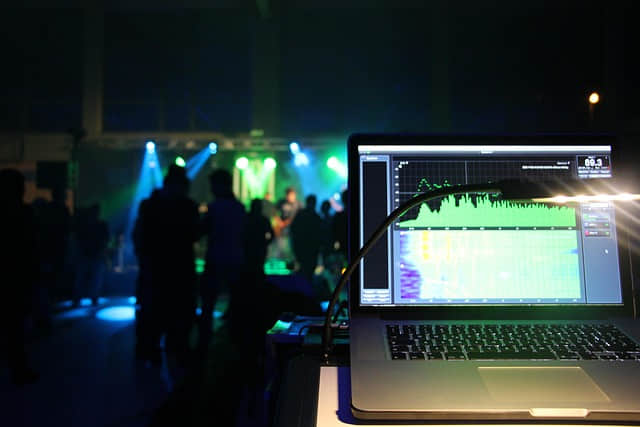
Currently, most professional sound systems used in domestic dance halls are imported equipme...
Read more
1. Hip-hop originated from Black culture. It's a laid-back and elegant form of music, named ...
Read more
As the year draws to a close, China's consumer goods export market, which should be bustling...
Read more